
Julia Ward Howe’s Poem
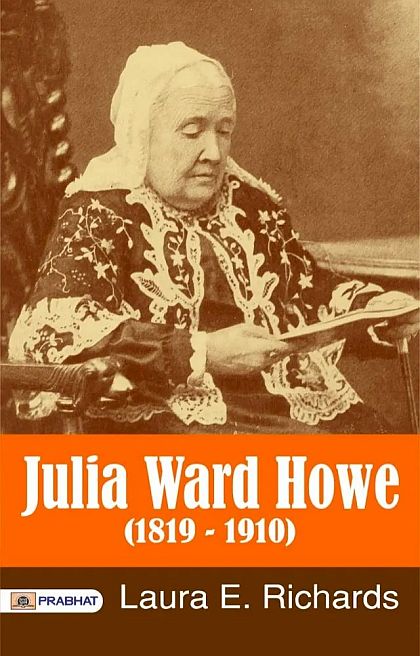
“The Battle Hymn of the Republic” poem was first published in The Atlantic magazine February 1862. Julia Ward Howe was paid four to five dollars with no byline (name of poet) as was the custom at the time. The editor James T. Fields gave Howe’s poem its grand title, not Julia Ward Howe’s decision. Julia had written her words to the very well known tune at the time, “John Brown’s Body,” a Union marching song that became an official anthem of the Union Army.
Jeffrey Goldberg, editor, writes eloquently about America’s Promise in this July 2026 publication of both music and lyrics printed large on the cover of The Atlantic for the first time with the name of the poet as well, finally all these years later, during the 250th of our Declaration of Independence.
The refrain “transfigures you and me” seems to touch most Americans, even today during these troubled times.
The now famous Willard Hotel, near the White House, was where Howe wrote these words quickly during a night of anxiety. She submitted the poem to The Atlantic with this supplication: “Do you want this, and do you like it, and have you any room for it…?” Without a title by Howe it was published the following month in February as “The Battle Hymn of the Republic.”
As an active abolitionist and suffragist, Howe had great anxieties during those wretched days of Civil War strife in 1862. Sleepless nights and constant tension during troubling times of war while awake. “Our in-house historian, Jake Lundberg, writes in this (2026) issue that the poem is both an explanation of the promise of America and an exhortation to persevere on behalf of the country…our unofficial national anthem…”
“The Star Spangled Banner” is more difficult to sing and adopted in later years from a minor war at Baltimore’s Fort McHenry, poem by Francis Scott Key.
Howe’s life story was written by her daughter Laura Richards and two sisters assisting. The lengthy two volume biography won the first Pulitzer Prize ever given. I read the second volume only which tells of their mother’s great activism during the Civil War and later.
Laura Richards was our local Great Pond writer of many books who also ran the Merryweather Camp for boys with her husband. The Richards family lived in nearby Gardiner and had affiliations with that town’s Pulitzer poet Edwin Arlington Robinson. Much to my surprise I learned that Kermit Roosevelt at Merryweather Camp sent Robinson’s poetry to his father the President [Theodore Roosevelt]. Literary ventures at summer camp on Great Pond with Latin and Greek tutoring. After morning structured study, they all swam, boated and competed in sports.
For more on Julia Ward Howe and Camp Merryweather, go hither.
Download Full Newspaper: High Res | Low Res (Details…)
<— Previous Article • Summaries • Next Article —>
©2026 by Summertime in the Belgrades. All rights reserved.