
When Auctions Were A Way of Life
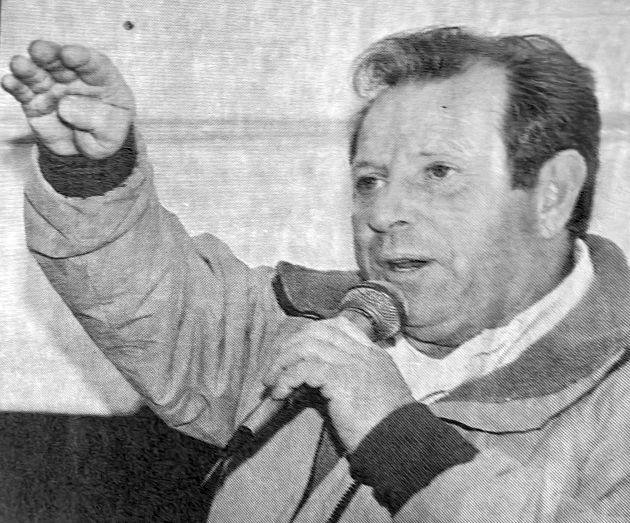
April 29, 1973: The date of Col. Bill’s very first auction in Smithfield, Maine. After attending auctioneering school in the midwest, the newly licensed Col. Bill got to show off his recently acquired skills as a licensed auctioneer. The old pole barn that stored hay bales back behind the family dairy barn was the site of the much anticipated first auction. Many bales were lifted by the baling twine and restacked away from the entrance to the barn to make room for the staging area and small makeshift livestock ring.
Merle, the owner of the auction and Bill’s father, advertised in the local newspaper that they were looking for consignments and livestock for the opening day event. Betty, Bill’s mother, was in charge of concessions, baked sweets, made sandwiches and bought soda by the case set in coolers full of ice, to sell on the card tables set side by side outside in the sunshine on fresh mown grass along the dirt driveway. Potential buyers had to pass her by to get to the pole barn. The standing room only auction area at the old pole barn had reached its limits for the ever growing crowds that gathered over the next several weeks.
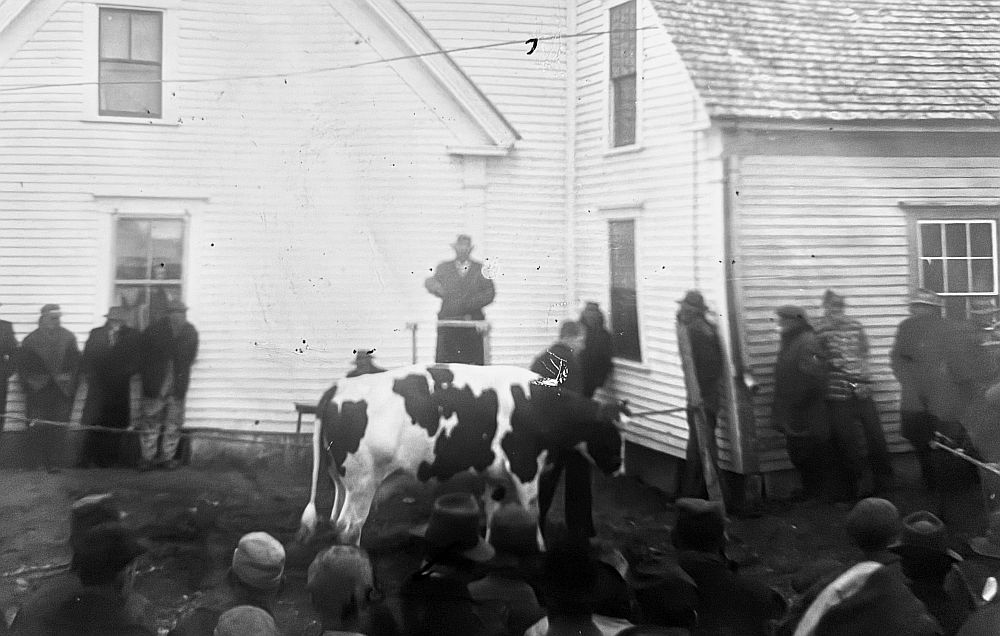
In the mid 1940s, Merle had a dream to own a dairy farm and raise his children there with Betty. Working hard to reach his goals made his dream come true. He went about things a bit differently than most local farmers and even held cattle auctions at his newly acquired farm. One of the slightly damaged black and white photos Betty saved in a photo album shows a few dozen men dressed in long wool coats, their derby hats on their heads, hands in pockets to keep warm as the cows were put on display by a handler. Betty’s handwritten description reads, “Our Auction 1946, Merle Mosher’s auction at the Dudley Farm (their farm), Sherm English, Auctioneer.” It is almost guaranteed a young Bill was there watching outside alongside the men.
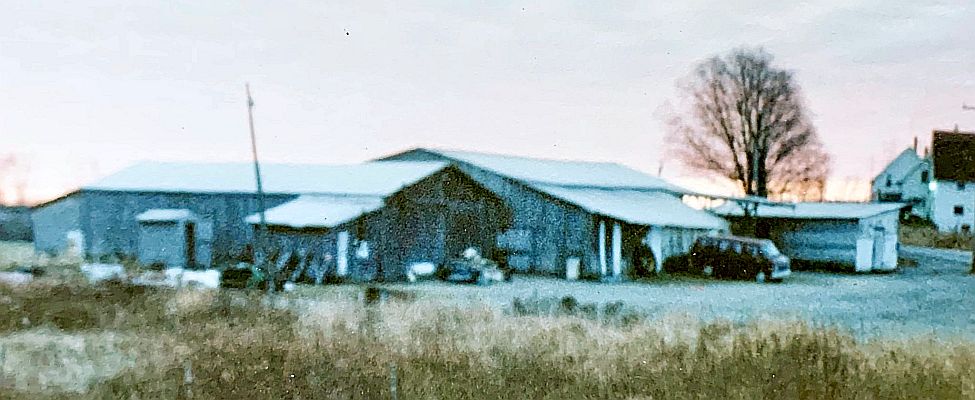
Merle and Bill’s vision for an actual stand-alone, much larger, auction barn to host the auctions came to light. The Somerset Auction Barn was built in the pasture across from the farmhouse. A concession stand was also built, so Betty could expand her concession menu with heartier fare. There was plenty of space for parking, wide elevated seating inside so buyers could place their items at their feet and everyone had a clear view of the auction ring, and an “office” area for Bill’s wife Nancy to hand out numbers, take payments, make pay outs. On the other side was the ramp for cattlemen and women to back up and unload their livestock, large holding pens, and smaller ones for caged animals. At times, animals needed to be poked and prodded to go in the direction of their holding pen. Col. Bill had wooden canes steam stamped with his name and town on them to give out to the cattle dealers to use as prods as a gift for their loyalty and of course, advertising!
The sign, proudly displayed for many years for the officially named Somerset Auction Barn was made from an old barn door, hinges still in place on the bottom. It was hand painted by amateur sign painter Bill, using white paint as the base and black lettering. It simply said:
AUCTION EVERY SUNDAY
CONSIGNMENTS WANTED
Col. Bill MOSHER
His name displayed at the bottom was his calling card. I guess if you asked around, someone would be able to tell you how to get in touch with him. No phone number was displayed.
Consignments, like box lots (which are a bunch of things and stuff that have nothing to do with anything else put into a box to be sold), tools, antiques, saddles, furniture, Avon bottles, etc. needed to be on display to pique the interest of would be bidders.
After the consignments were sold, a brief stoppage occurred to prepare for the sale of the animals. People would stretch their legs, go to the concession stand for refreshments, some would pay, bring their items to their car or truck then come back to just watch the next half. One by one, a complete description, if there was one, of the livestock brought into the ring was given by Col. Bill. It always looked like it was a smooth running operation but most likely there was a lot of commotion behind the scenes, especially getting unruly bulls, stallions and donkeys to cooperate going into the ring. Lots of laughter always ensued as Col. Bill would take a moment to crack a joke about his inept workers of the night, or tell them to get into the ring with the intimidating beasts so he could get the bidding started.
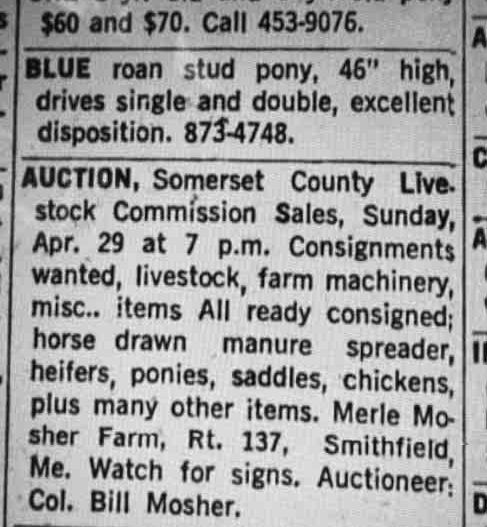
There was more to the auction business than simply waiting for people to bring things or livestock to the auction. Ads were written and placed in the Morning Sentinel (a daily newspaper) early in the week as soon as enough consignments and livestock were secured. Merle and Bill, usually just Bill and a hired hand, would hit the road a few times a week in the old cattle truck, with its cockeyed wooden ramp securely clipped to each side of the body. Prior to striking out, phone calls were made from landlines to many farmers, cattle dealers, horsemen and women to find livestock, a bigger money maker than the consignments, in need of new homes whether for pleasure or business.
Hundreds of miles, many longer than necessary conversations and deals later, animals would be unloaded and herded into the pens at the auction barn, fed and watered until Sunday evening when they would be auctioned off to the highest bidder. Col. Bill was the main event for most auction goers. He would welcome you by name as you walked in to find a seat, if he knew it, often times in the middle of selling a boat motor, box lot, or a deer head…you get the picture. He had a gift to make you feel welcome, make you laugh at yourself or himself, with his teasing and fun prodding and poking of the old timers and new visitors. His charm, wit and attention to detail was second to none. It was obvious when you would hear the laughter and crowd heckling that many came just to listen to his auctioneering banter for entertainment.
Gripping the gavel end using the handle as a pointer, he would point to the numbered index cards held high, a hand gesture or even an eyebrow raise from bidders. Sometimes he would draw a bidder in by cajoling them with sarcasm about how badly they needed an item. Here is a short example to help you imagine:
How much ya, gonna give? Let’s start it out at $5 dollars. I’ve got 5 and now 10. Ten, 10,10…I can tell you really want this, yes, you, the man in the hat looking at his wife that just hit him on the arm. Ten it is! Now can I get 15, who’ll give 15 for this amazing specimen of a box lot? No one? Going once, going twice…SOLD!
And with the slam of the gavel it was on to the next item.
Laughter was always a key component of the day. There were spotters paid or unpaid, in the ring that would help Col. Bill target bidders in the far reaching corners of the stands so that if he was navigating a bidding war, he would not miss anyone’s bid. Once the item(s) were sold, a runner, the person responsible for delivering the winning bidder the goods purchased, would set the item near them or hand it to them then walk away to grab the next item sold and so on.
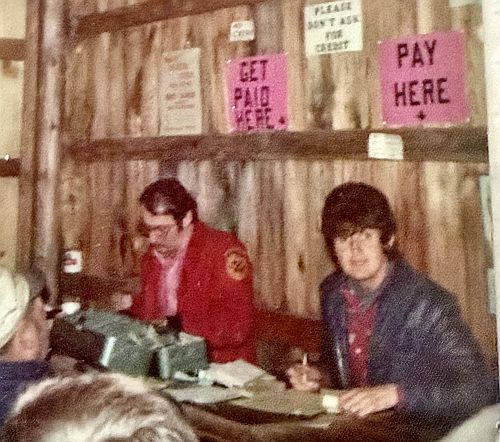
Someone — it could have been Diane, Martha, or Bill’s sister Jean — would sit next to him with a yellow legal-sized pad of paper that was scored with two lines on one side to notate the item description, the winning bidders number and the price paid. Once a page was full, the runner or closest person to her was instructed to take it to Nancy. Each number corresponded to a name in the file Nancy kept and the information gathered was rewritten to clearly show what was purchased and for how much. Honesty of the bidders, who already had their goods in hand, was imperative and expected. They were to go to the office area to pay before they left the barn to head home.
Auctioning off the livestock was commonly the most exciting part of the day. Once all of the consignments were sold, paid for, and taken out by the new owners, an entirely different feel took over. Cattle dealers in their common green khaki pants with matching shirts, eating dynamites or American chop suey from the concession stand, would chat around the ring or seated in the stand after doing a walk through to check out the animals in the pens earlier. Guinea pigs, rabbits, geese, ducks, pheasants, chickens, goats, sheep, ponies, horses, calves, cows, bulls, pigs, piglets, you name it, Col. Bill has sold it. The squeal of a child that wore down a mother or a father for a pet to take home was music to Bill’s ears and would suggest another one so that one would not be lonely.
The lively communication between Bill and his “fans” is truly what made the auction one of the most memorable events in Smithfield’s history. People would drive from all over the state to attend. Cars, pickup trucks, cattle trucks and motorcycles would be parked on the side of the road on Route 8 once the lot was filled and even along Pine Tree Camp Road. Neighbors would call the police once in a while to complain about cars parked too close to their yards. “No Parking” signs could be found along Route 8 right up until the most recent complete overhaul of the roads a few years ago.
Summer people still share favorite memories of their time at the auction and how much fun it was to be so close to farm animals — the boards on the pens were plenty wide enough to reach in and touch — being able to run around and make friends with other children while parents did their own thing.
Bill thrived as an auctioneer and was sought to serve as auctioneer at fairs, toy auctions at Christmas, car auctions, and any auctions that didn’t coincide with his on Sunday. As the runner for many Sunday auctions through the years of my youth, I was always so proud to say, “Yeah, that’s my dad.”
Download Full Newspaper: High Res | Low Res (Details…)
<— Summaries • Next Article —>
©2026 by Summertime in the Belgrades. All rights reserved.